Resources / One-party consent, state by state
Field guide
One-party consent, state by state.
Which states let a caller record the call, which require everyone on it to agree, and what that means for a dealership in 2026. Every state and DC, in plain language, with the statute behind each one.
The rule
One person on the call, or everyone on it.
Every phone call into your store is governed by a recording-consent law. The question each state answers is simple: who has to agree before the call can be recorded?
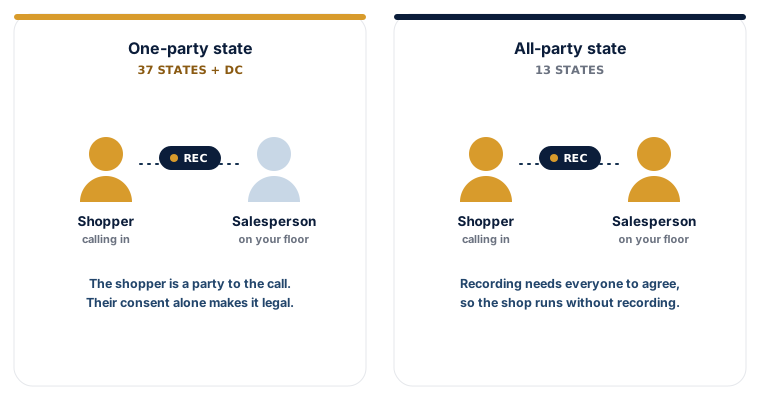
The customer on the phone with your salesperson is always a party to that call. In 37 states and DC, their consent alone makes the recording legal.
The split
Most of the country is one-party.
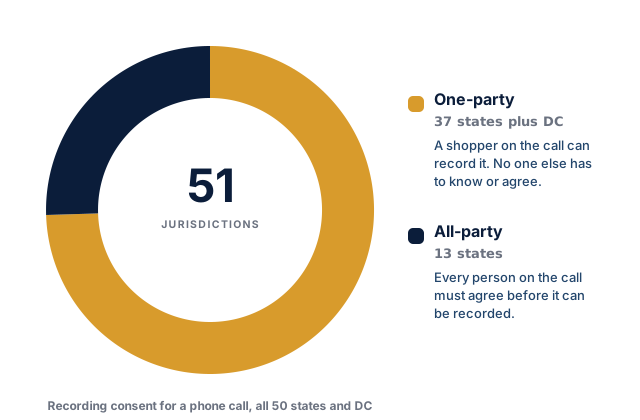
Thirty-seven states and the District of Columbia follow the one-party rule. Thirteen states require everyone on the call to agree. Two states do not read the way their statutes suggest, and they trip people up.
Michigan reads one-party
The statute says all-party, but Michigan courts recognize a participant exception (Sullivan v. Gray, reaffirmed federally in 2026). A person on the call may lawfully record it.
Mich. Comp. Laws § 750.539c
Nevada reads all-party
The statute says one-party, but the Nevada Supreme Court has been read to require all-party consent for phone calls. The safe reading is all-party.
Nev. Rev. Stat. § 200.620
Find your state
Tap where your rooftops are.
Amber states are one-party. Blue states are all-party. Tap any state for its rule, its enforcement level, and what a mystery shop covers there.
Pick a state
What it changes
The rule decides one thing: whether the call is on tape.
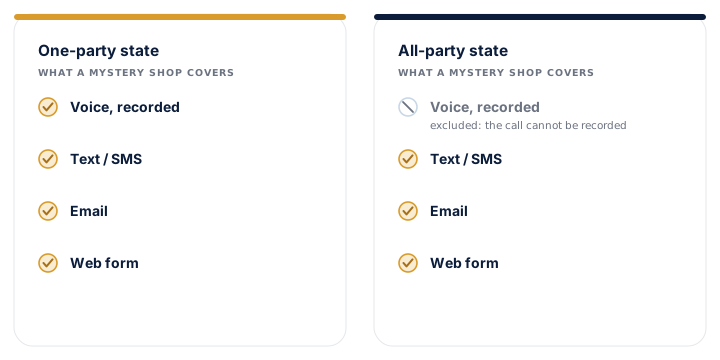
Consent law governs recording a call. It does not touch a text, an email, or a web form, because those write their own record. So a store can be shopped anywhere. What changes by state is the phone.
State by state
All 50 states and DC, one table.
The recording rule, what a mystery shop covers, and the enforcement picture in each state. The four marked states carry a wrinkle worth reading in the footnotes. Every state name opens its full profile: the statute, the enforcement record with sources, and what Argus360 shops there.
| State | Recording rule | A shop covers | Enforcement |
|---|---|---|---|
| Alabama | One-party | Voice, text, email, web | No state dealer action on record |
| Alaska | One-party | Voice, text, email, web | No state dealer action on record |
| Arizona | One-party | Voice, text, email, web | No state dealer action on record |
| Arkansas | One-party | Voice, text, email, web | No state dealer action on record |
| California | All-party | Text, email, web | Active · CARS Act (SB 766) · in force Oct 1 2026 |
| Colorado | One-party | Voice, text, email, web | No state dealer action on record |
| Connecticut | All-party ‡ | Text, email, web | Active · Manchester City Nissan · $4M · FTC and Connecticut AG |
| Delaware | All-party | Text, email, web | No state dealer action on record |
| District of Columbia | One-party | Voice, text, email, web | No state dealer action on record |
| Florida | All-party | Text, email, web | No state dealer action on record |
| Georgia | One-party | Voice, text, email, web | No state dealer action on record |
| Hawaii | One-party | Voice, text, email, web | No state dealer action on record |
| Idaho | One-party | Voice, text, email, web | No state dealer action on record |
| Illinois | All-party | Text, email, web | Active · Leader Automotive · $20M · Illinois AG |
| Indiana | One-party | Voice, text, email, web | No state dealer action on record |
| Iowa | One-party | Voice, text, email, web | No state dealer action on record |
| Kansas | One-party | Voice, text, email, web | No state dealer action on record |
| Kentucky | One-party | Voice, text, email, web | No state dealer action on record |
| Louisiana | One-party | Voice, text, email, web | No state dealer action on record |
| Maine | One-party | Voice, text, email, web | No state dealer action on record |
| Maryland | All-party | Text, email, web | Active · Lindsay settlement · Maryland AG |
| Massachusetts | All-party | Text, email, web | No state dealer action on record |
| Michigan | One-party * | Voice, text, email, web | No state dealer action on record |
| Minnesota | One-party | Voice, text, email, web | No state dealer action on record |
| Mississippi | One-party | Voice, text, email, web | No state dealer action on record |
| Missouri | One-party | Voice, text, email, web | No state dealer action on record |
| Montana | All-party | Text, email, web | No state dealer action on record |
| Nebraska | One-party | Voice, text, email, web | No state dealer action on record |
| Nevada | All-party † | Text, email, web | No state dealer action on record |
| New Hampshire | All-party | Text, email, web | No state dealer action on record |
| New Jersey | One-party | Voice, text, email, web | No state dealer action on record |
| New Mexico | One-party | Voice, text, email, web | No state dealer action on record |
| New York | One-party | Voice, text, email, web | Active · FAIR Business Practices Act |
| North Carolina | One-party | Voice, text, email, web | No state dealer action on record |
| North Dakota | One-party | Voice, text, email, web | No state dealer action on record |
| Ohio | One-party | Voice, text, email, web | No state dealer action on record |
| Oklahoma | One-party | Voice, text, email, web | No state dealer action on record |
| Oregon | All-party § | Text, email, web | No state dealer action on record |
| Pennsylvania | All-party | Text, email, web | No state dealer action on record |
| Rhode Island | One-party | Voice, text, email, web | No state dealer action on record |
| South Carolina | One-party | Voice, text, email, web | No state dealer action on record |
| South Dakota | One-party | Voice, text, email, web | No state dealer action on record |
| Tennessee | One-party | Voice, text, email, web | No state dealer action on record |
| Texas | One-party | Voice, text, email, web | Active · Asbury (David McDavid) · litigated |
| Utah | One-party | Voice, text, email, web | No state dealer action on record |
| Vermont | One-party | Voice, text, email, web | No state dealer action on record |
| Virginia | One-party | Voice, text, email, web | Active · Lindsay dealerships · E.D. Va. |
| Washington | All-party | Text, email, web | No state dealer action on record |
| West Virginia | One-party | Voice, text, email, web | No state dealer action on record |
| Wisconsin | One-party | Voice, text, email, web | Documented · Rhinelander Auto Center · refunds |
| Wyoming | One-party | Voice, text, email, web | No state dealer action on record |
* Michigan's statute reads all-party, but its courts recognize a participant exception, so a person on the call may record. † Nevada's statute reads one-party, but its Supreme Court has been read to require all-party consent for calls. ‡ Connecticut is all-party for telephone recording under its civil statute; its in-person criminal law reads one-party. § Oregon is one-party for telephone but all-party for in-person conversation; it is classified all-party as the safe reading.
Why it matters now
Enforcement stopped being theoretical.
The federal CARS Rule was vacated in January 2025, and enforcement did not slow down. It moved to FTC Act Section 5 and to the states, and 2026 has been the busiest stretch on record.
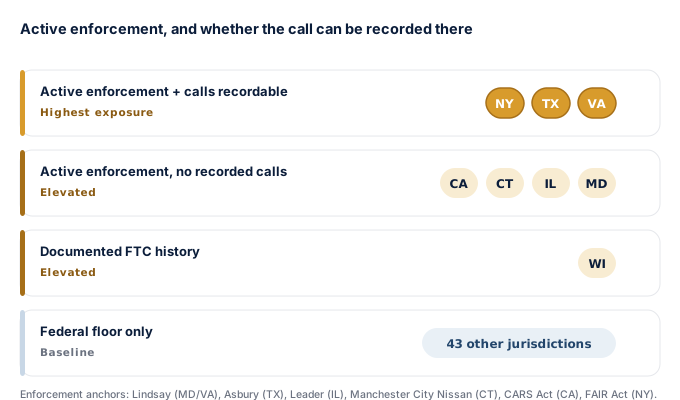
The overlap to watch: states where enforcement is active and a caller can legally record. In New York, Texas, and Virginia, the regulator is awake and the evidence is easy to make.
What to do with this
Three moves for a principal this quarter.
Assume the tape is rolling
In a one-party state, any caller can already be recording your people, legally. Train the floor to speak as if every call is on the record, because it may be.
Test your own stores first
Hear what your customers hear before a regulator or a plaintiff's lawyer does. A recorded shop of your own rooftops is the cheapest audit you will ever run.
Put it on paper
Map every rooftop to its recording rule and its enforcement exposure, and keep the document current. That is a ten-minute exercise on the Compliance Map.
See your states on the map.
The interactive Compliance Map carries the rule, the statute, and the named enforcement action for every state, and it builds a rooftop exposure report you can keep.
Sources and standing caveat
Consent classifications are compiled from state statutes via Recording Law and Nimitai's 2026 survey. Enforcement matters are drawn from public FTC records: the Lindsay settlement, the Leader Automotive judgment, the Asbury complaint, the Manchester City Nissan settlement (FTC and Connecticut AG, August 19, 2026), and the March 2026 warning letters.
This guide is a general compliance reference, not legal advice. Recording consent and enforcement exposure change, and the dataset behind this page is under counsel review. Before you rely on a classification for a recorded call, confirm the current rule with your attorney.